


By Claire Bacon, ACN, CNC
Have you ever had pain, tingling, or numbness that starts in your neck or back and travels down your arm or leg? That “traveling” pain is one of the most telling signs that a spinal nerve is being irritated. To understand why it happens, it helps to know a little about how your spine and nerve roots are wired together.
How your spine and nerve roots are connected
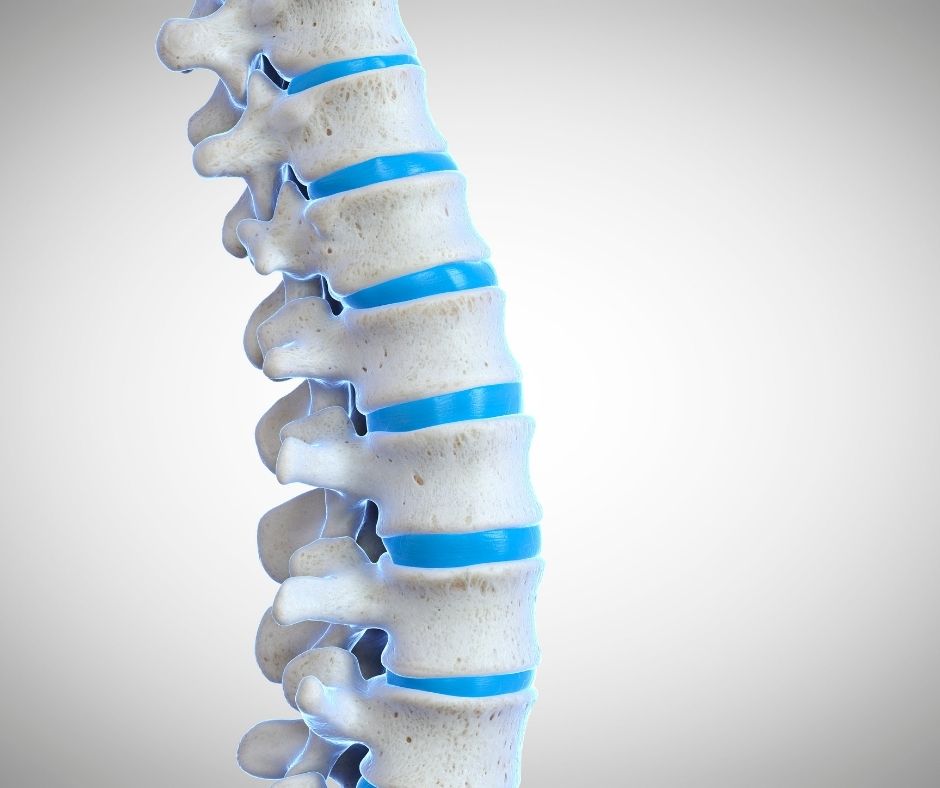
Your spine is a stack of bones called vertebrae. Between each pair of vertebrae sits a cushion called a disc, which acts like a shock absorber. At every level of the spine, a pair of nerves branches off the spinal cord (from the nerve roots) and exits through small openings between the bones. Each of these nerves travels to a specific part of the body.
Because each nerve serves a predictable area, doctors and therapists can often figure out which nerve is irritated just by listening to where you feel symptoms. The strip of skin that a single nerve supplies is called a dermatome. There is also a matching pattern for muscle strength and reflexes, so a problem at one level tends to produce a recognizable “signature” of symptoms.
What problems can go wrong with a disc?
Discs can change with age, wear and tear, or injury. A few common terms you might hear:
Dehydrated or degenerated disc:
Over time, discs can lose water and height, becoming flatter and less springy. These are very much like a flat tire with a slow leak.
Bulging disc:
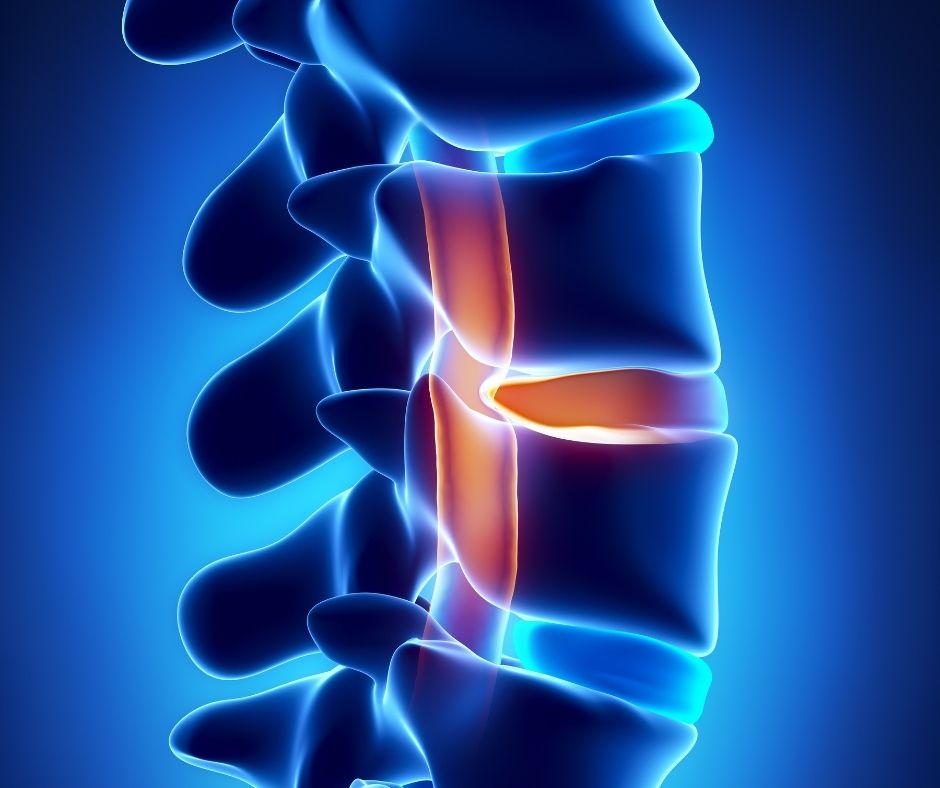
The disc’s outer wall pushes outward. Bulges are extremely common and are actually found in many people who have no symptoms at all. Having a bulge does not necessarily mean you’ll experience pain from the nerve roots.
Herniated disc:
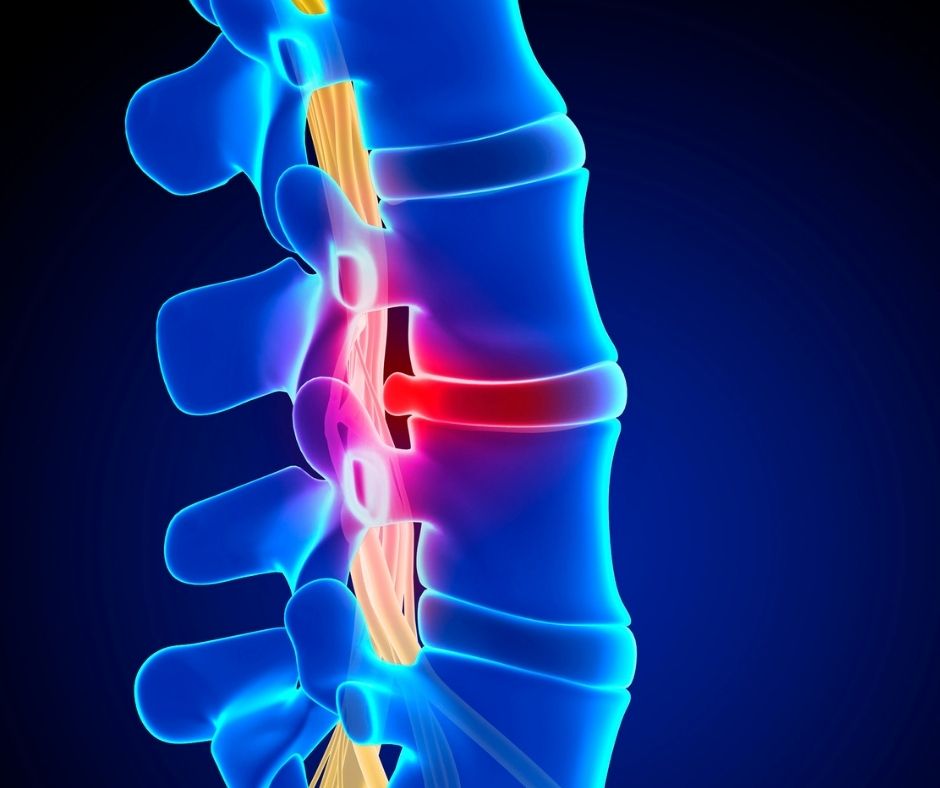
The soft center of the disc pushes through a tear in the outer wall. Depending on how far the material travels, this is sometimes called a protrusion, extrusion, or sequestration. A herniation can press on a nearby nerve root.
When a bulge or herniation presses on a nerve, symptoms tend to follow that nerve’s map, which is why pain can show up far from the actual spine problem, such as pain from a low-back disc traveling down into the leg.
Neck (cervical) levels and what they affect
Problems in the neck (originating at the nerve roots) often send symptoms down into the shoulder, arm, and hand:
- C5 nerve: Can affect shoulder and upper-arm strength, with sensation changes over the outer (side) part of the arm.
- C6 nerve: Can affect the ability to bend the elbow and cock the wrist back, with tingling or numbness running down the front and outer forearm into the thumb and index finger.
- C7 nerve: Can affect the ability to straighten the elbow and move the fingers, with symptoms in the middle finger and middle of the palm.
- C8 nerve: Can affect finger movements and grip, with symptoms in the ring and pinky fingers and along the inner hand and forearm.
- T1 nerve: Can affect the small muscles that spread and close the fingers, with symptoms along the inner arm.
Mid-back (thoracic) levels
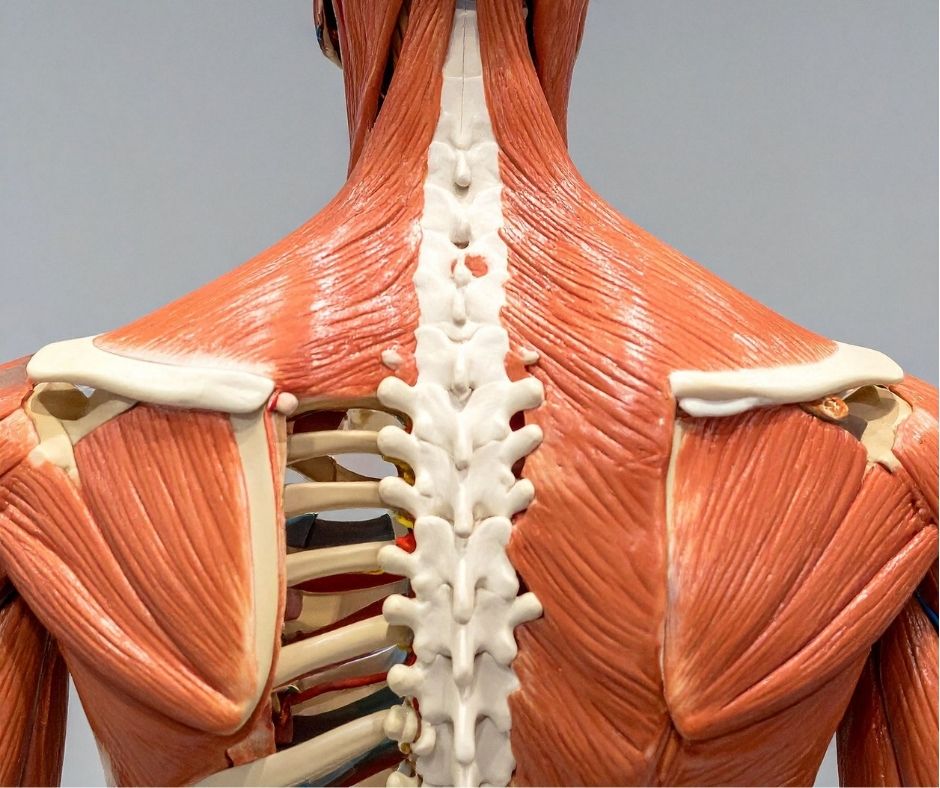
The mid-back nerves mostly wrap around the trunk like a band rather than going down an arm or leg. Irritation here can cause a band-like ache or unusual skin sensations around the chest or abdomen.
A few easy landmarks: the nipple line lines up with the T4 nerve, the bottom of the breastbone with about T7, and the belly button with T10.
Low back (lumbar) and pelvis (sacral) nerve roots
This is the region most people associate with sciatica, where pain shoots down the leg:
- L2 and L3 nerves: Tend to cause symptoms across the front and inner thigh.
- L4 nerve: Can affect the ability to lift the foot and the knee reflex, with symptoms down the inner leg toward the inner foot and big toe.
- L5 nerve: Can affect lifting the big toe and foot, with symptoms along the outer leg, the top of the foot, and the middle toes.
- S1 nerve: Can affect pushing the foot down (like pressing a gas pedal) and the Achilles reflex, with symptoms down the back and outer leg to the outer foot and little toe.
- S2 nerve: Tends to cause symptoms along the back of the thigh and calf.

Other conditions also related to the nerve roots
Not all radiating pain comes directly from a disc. Other conditions can mimic it, and telling those conditions apart is a big part of getting the right treatment:
Facet syndrome:
The small joints at the back of the spine can become inflamed and stiff. Pain is usually worse with leaning back or twisting. It could radiate, but the pain is typically worse in the back itself. (As opposed to with a disc problem, the leg or buttock pain is often worse than the back pain.)
Foraminal encroachment:
The openings where nerves exit the spine become narrowed, often from a herniated disc, lost disc height, arthritis, bone spurs, or a slipped vertebra. This puts pressure on the nerve and may cause symptoms on one side.
Thoracic outlet syndrome:
Nerves and blood vessels get compressed near the neck, collarbone, and first rib, causing pain, tingling, or weakness in the arm and hand. Poor posture, injury, repetitive activity, or carrying a heavy backpack can contribute.
Burner/stinger:
A brief burning or stinging jolt down the arm after the head and shoulder are forced apart, common in football and rugby. It usually settles down quickly with rest.
Carpal tunnel syndrome:
The median nerve is squeezed at the wrist, causing numbness and tingling in the thumb, index, middle, and part of the ring finger. The feeling is often worse at night and relieved by shaking the hand.
Piriformis syndrome:
A muscle deep in the buttock presses on the sciatic nerve, causing pain or tingling down the leg that usually stops above the knee. It is often mistaken for true sciatica, which starts in the spine.
Meralgia paresthetica:
A nerve near the front of the hip gets pinched under a ligament, often from tight waistbands, a heavy tool belt, or resting a child on the hip. It causes burning or numbness over the outer thigh.

Nutritional Supplements for Healthy Nerve Roots and Discs:
We can also recommend targeted nutrition to help your muscles, nerves, and joints relax and reduce in inflammation.
We have a few favorite vitamins for anyone working on stronger ligaments and tendons, healthier discs, and reduced inflammation. If you’re in pain, or working on your spine health with decompression, you probably want to be taking one or more of these special vitamins:
- Standard Process Ligaplex I or II – a foundational mineral supplement with lots of manganese, for proper maintenance of the ligaments and tendons. This one is our favorite multivitamin for any athlete.
- Premier Research Joint and Disc – provides Andrographis paniculata, White Willow Bark extract,,and hyaluronic acid. These ingredients help with joint mobility, disc health, cartilage, and muscle recovery.
- Food Research Inflam-Enzymes – provides nutrients, enzymes, and herbs needed to maintain and support optimal ligament and tendon health. Helps with muscle and joint detoxification, flexibility, and acute discomfort following an accident or injury.
- Mediherb Boswellia Complex – straight from Australia, this is an herbal combination of Boswellia (Frankincense), Ginger, Celery Seed, and Turmeric – our best for systemic, chronic inflammation. These herbs are used to maintain healthy joints, support healthy circulation and normal function of the kidneys, as well as provide antioxidant activity.
- Biotics Biomega SPM – our most concentrated source of anti-inflammatory Specialized Proresolving Mediators. This is a super fish oil, on steroids!
The bottom line
The area(s) where you feel symptoms often points to which of the nerve roots is involved. Being able to check in on the health of your nerve roots can help explain why a problem in your spine shows up in your arm or leg. But many of these conditions overlap, and MRI imaging findings like bulging discs are common even in people without pain.
If you have radiating pain, weakness, numbness, or tingling, it is worth being evaluated by a Chiropractor who can pinpoint the source and guide the right treatment. Seek prompt care for red-flag symptoms such as loss of bowel or bladder control, progressive weakness, or numbness in the groin area.
This is what we’re here for!
Dr. Bob and our team of wonderful Chiropractors specialize in knowing when a chiropractic adjustment is enough, or when spinal decompression is the next necessary step.
You don’t have to suffer!
Reach out and make an appointment if you’re in need of help!