


By Claire Bacon, ACN, CNC
In our Nutrition Consults, we talk all the time about supporting the HPA axis and how doing so can help you feel better. In fact, the very first muscle testing point we check is the HPA axis. But do you really know what that means… or have you just been nodding along like a deer in headlights?
The hypothalamus is one of the first brain regions to notice declining estrogen, which is why menopause isn’t just about ovaries. It’s also about the brain. That helps explain why so many women experience hot flashes, disrupted sleep, increased belly fat, mood changes, and appetite shifts all at the same time.
- Can’t lose weight? Your hypothalamus is involved.
- Wake up at 3 a.m.? Your hypothalamus is involved.
- Always cold? Your hypothalamus helps regulate body temperature.
- Hot flashes? The hypothalamus is your body’s thermostat.
- Constantly thirsty? The hypothalamus monitors hydration.
- Brain fog and poor focus? It communicates with areas of the brain involved in cognition and motivation.
- High cortisol? That’s the HPA axis in action, running your stress response.
We want to make sure you truly understand what the hypothalamic-pituitary-adrenal (HPA) axis is and why it matters so much to your health.
And it all starts with the hypothalamus…
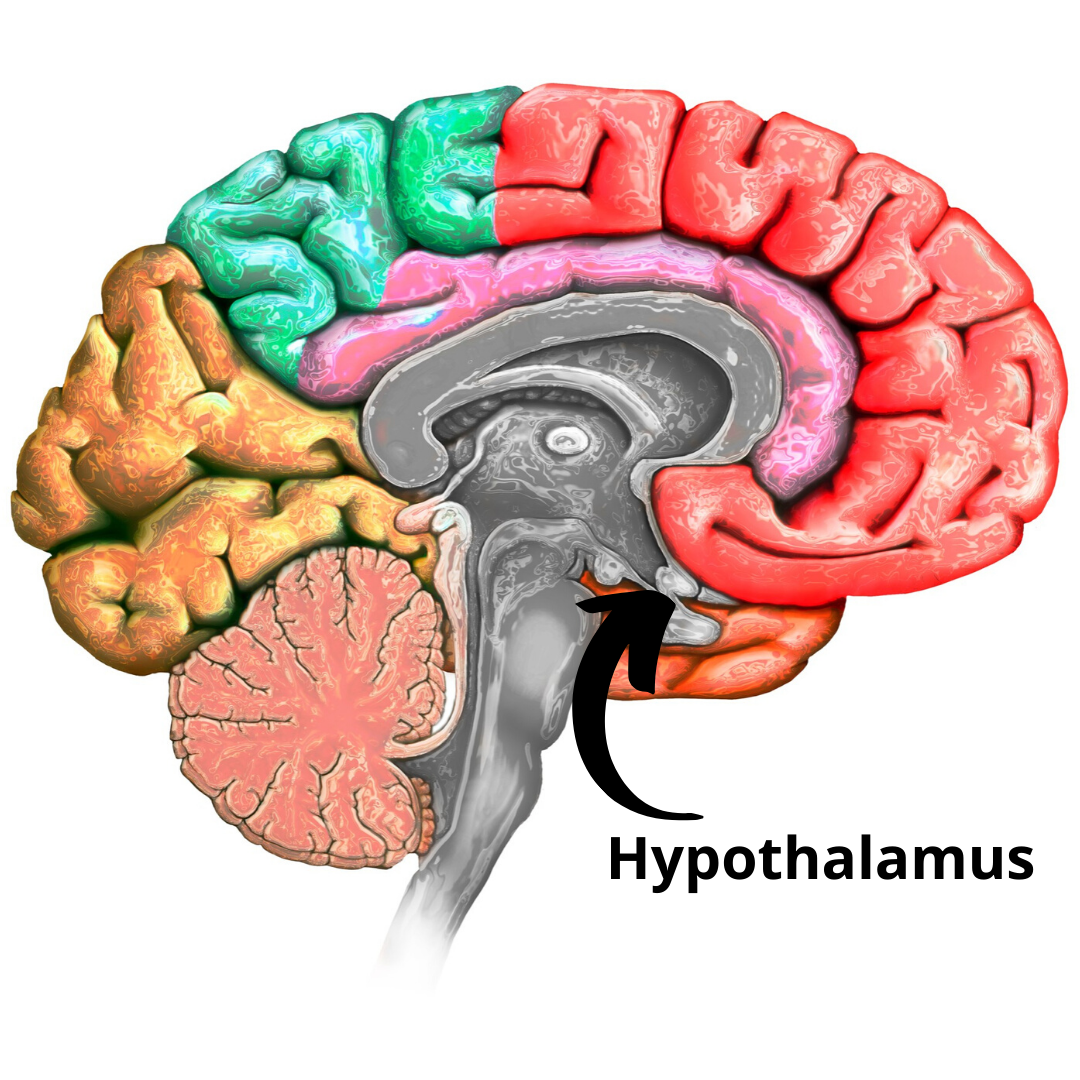
Physiology of the Hypothalamus
The hypothalamus is a tiny, pea-sized region deep within the brain that acts as the body’s master control center. It sits next to specialized areas where it can “sample” what’s circulating in your bloodstream, including:
- hormones,
- nutrients,
- inflammatory signals, and
- even some toxins.
Because of this unique location, it’s constantly exposed to the onslaughts of life. And it’s constantly gathering information about what’s happening inside your body and in the world around you. It perceives whether you’re in a safe space, and whether metabolic processes are balanced inside you.
This little powerhouse has an enormous job. It helps regulate everything from stress hormones and metabolism to sleep, temperature, hunger, hydration, mood, and most of all – your hormones. In many ways, it’s the Master Conductor of your body’s orchestra, making sure every system is in harmony.
So, why do we spend so much time supporting the hypothalamus? Because when it’s overwhelmed by stress, poor sleep, inflammation, deficiencies, or toxins, the effects can be felt throughout your entire body.
Take notes if you need to, because here are the Top 10 ways the hypothalamus influences nearly every physiological process in your body.
1. It keeps the body in balance (homeostasis)
What it does: The hypothalamus constantly monitors internal conditions such as temperature, hydration, blood sugar, hormone levels, and energy status.
Why it matters: This is its master job: keeping the body from drifting too far out of its healthy range. The hypothalamus is your body’s built-in balancing system.
What you can do: Reset your hypothalamus’ timing mechanism each day by getting natural morning light, whenever possible.
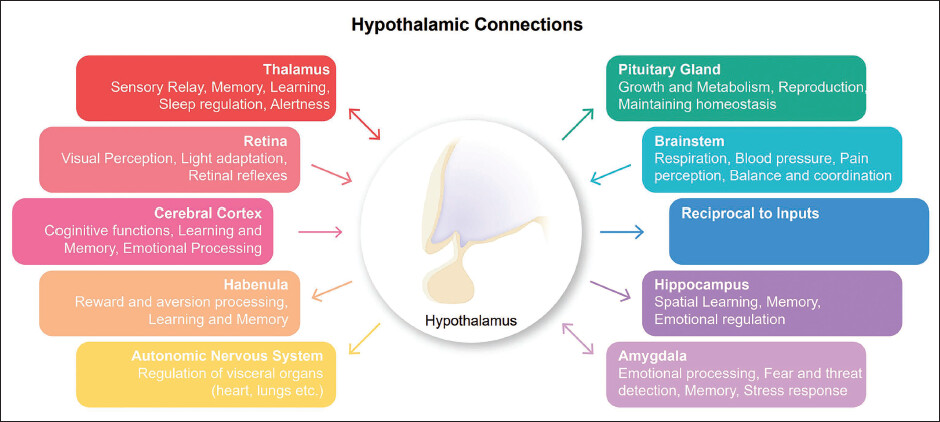
2. It controls body temperature
What it does: When you get too hot, it helps trigger sweating and cooling responses. When you get too cold, it can trigger shivering and heat production.
Why it matters: Stable temperature is essential for enzymes, metabolism, brain function, and survival. It acts like the body’s thermostat. At the same time, a good adaptability to different extremes in temperatures can be beneficial for a healthy body.
What you can do: See how you feel trying out alternating between red-light sauna sessions and a cold plunge, at places like SweatHouz. If you feel rejuvenated and energized afterwards, that’s a good sign! If you feel depleted and worn out, you’ve just identified a weak area of your body that needs restoration and strengthening.
3. It regulates hunger, fullness, and body weight
What it does: The hypothalamus responds to hunger and satiety hormones such as ghrelin and leptin.
Why it matters: It helps determine when you feel hungry, when you feel satisfied, and how the body manages energy stores. It is the brain’s fuel gauge.
What you can do: Leptin resistance is very similar to insulin resistance, and is closely tied to how well your body handles carbohydrates. Take it easy on your hypothalamus, and tweak your meals to be mostly Paleo or Mediterranean style, with plenty of protein and only small amounts of grains and carbs.
4. It regulates metabolism and blood sugar
What it does: The hypothalamus communicates with organs such as the pancreas and liver and helps coordinate energy use.
Why it matters: It influences insulin secretion, glucose balance, and overall metabolic health. And it helps decide how the body uses and stores energy.
What you can do: As mentioned above, we don’t want the hypothalamus getting pummeled by high glucose and insulin levels. So, to keep that in control, we want to work on building muscle mass. Having great muscle mass gives a place for your carbohydrates to go, and helps keep your blood sugar balanced around the clock.
5. It controls sleep and circadian rhythms
What it does: Specialized hypothalamic regions, including the suprachiasmatic nucleus (SCN), help regulate the body’s 24-hour clock.
Why it matters: Sleep timing affects hormones, appetite, mood, cognition, recovery, and metabolic health. You could say, it is your body’s master clock.
What you can do: Keep a consistent bedtime and wake time, as consistently as possible. You really do need to stay around the 7-8 hour timeframe. That length of time allows you to have five full 90-minute sleep cycles, which helps to clean the brain of toxins and fully consolidate your memories for the day.
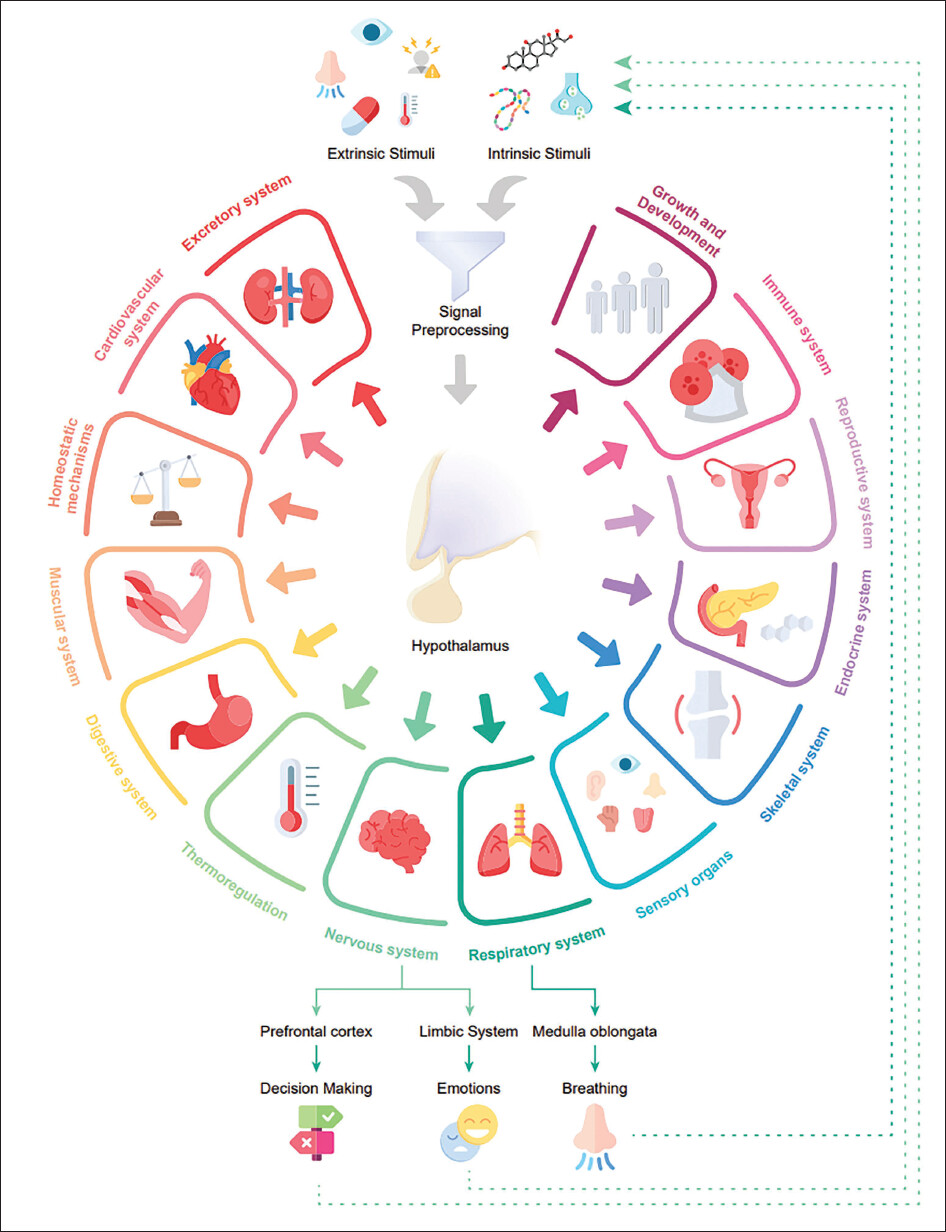
6. It coordinates the stress response
What it does: The hypothalamus activates the HPA axis, leading to the release of cortisol and other stress hormones, like adrenaline/norepinephrine and epinephrine.
Why it matters: This helps the body respond to immediate challenges in the short term. But chronic activation can affect sleep, mood, inflammation, blood sugar, and energy. Effectively, it is the body’s stress command center.
What you can do: Spend 5 minutes doing slow, diaphragmatic breathing, whenever you feel stress or tension getting high. Feel your nervous system relax and your blood pressure coming down.
7. It regulates hormones through the pituitary gland
What it does: The hypothalamus sends releasing and inhibiting signals to the pituitary gland.
Why it matters: Through this partnership, it influences:
- Thyroid hormones (metabolism, cognition, and more)
- Growth hormone (growth and repair)
- Reproductive hormones (estrogen, progesterone, testosterone, FSH and LH)
- Prolactin (lactation)
- Cortisol regulation (stress response)
- ADH/Vasopressin (water balance)
- Oxytocin (bonding and love, childbirth, milk ejection)
To sum it up, the hypothalamus is the main traffic controller for many major hormones. And when you add in exogenous hormones, potentially you can rock its little world. Hormones are powerful. We need to respect what they can do, and what they might do to knock our Master Regulator off-kilter.
A few key vitamins:
What you can do: Support the communication system between all of these glands by taking specific glandular extracts. These can be found in some of our favorite vitamins: Hypothalmex, Hypothalamus PMG, Simply Female, and Cytozyme PT/HPT.
Maybe you’re already been taking one of these products, but didn’t understand until now what it was for?
- Standard Process Hypothalmex – this is a specialized extract from the cytosol fluid inside the cells of a porcine (pig) hypothalamus gland. This provides the “nuts and bolts” that help the hypothalamus to run better.
- Standard Process Hypothalamus PMG – a slightly different kind of specialized extract containing the cellular nucleoprotein blueprint of bovine (cow) hypothalamus tissue. This product helps with growth and repair of the gland (rather than daily functioning).
- Food Research Simply Female – has a balanced blend of endocrine gland extracts sourced from Argentine cows: hypothalamus, pituitary, adrenal, thyroid, uterus, cervix, fallopian tubes, and ovaries. Remember, you need code ‘drbobbacon’ to enter the store.
- Biotics Cytozyme PT/HPT – supplies organ-specific support as lamb pituitary/ hypothalamic complex concentrate (ovine), combined with SOD and catalase, important antioxidant enzymes.
8. It regulates thirst and hydration
What it does: The hypothalamus monitors blood osmolarity—the concentration of fluids and electrolytes.
Why it matters: It helps trigger thirst and regulates antidiuretic hormone (ADH), which helps the kidneys conserve water. Overall, it’s a master influence over how your body stays properly hydrated.
What you can do: Start being more aware of how much fluid you’re consuming. You want about half your body weight in ounces of water. And check your labels on your electrolytes. In most cases, you’re looking for a balanced ratio of sodium and potassium. Unless you’re running or cycling long distances in the heat, you really don’t need high sodium blends that aren’t balanced sufficiently with potassium.

9. It influences emotions, motivation, and behavior
What it does: The hypothalamus communicates with the amygdala, hippocampus, limbic system, and reward pathways.
Why it matters: It is involved in emotional responses such as fear, stress, reward-seeking, motivation, pleasure, and defensive behaviors. In other words, it helps connect body sensations with emotions and behavior.
What you can do: Realize that your daily routine for stress reduction is not just to keep tabs on your emotions. It has physiological benefits, too.
10. It helps coordinate breathing, heart rate, and blood pressure
What it does: The hypothalamus communicates with brainstem and autonomic nervous system circuits.
Why it matters: It helps adjust breathing patterns, heart rate, and blood pressure in response to stress, exercise, sleep, and emotional states. In short, it helps the body adapt to changing demands.
What you can do: Follow a consistent exercise plan and move your body regularly, but also allow for adequate recovery following your tough efforts.
Summary
As you can see, pretty much any symptom our clients want to work on can be partly traced to the function of the hypothalamus. You should recognize why symptoms like fatigue, stubborn weight, poor sleep, anxiety, hormone imbalances, brain fog, and chronic inflammation often occur together. It all could be stemming from the Master Regulator you never heard of, until now!
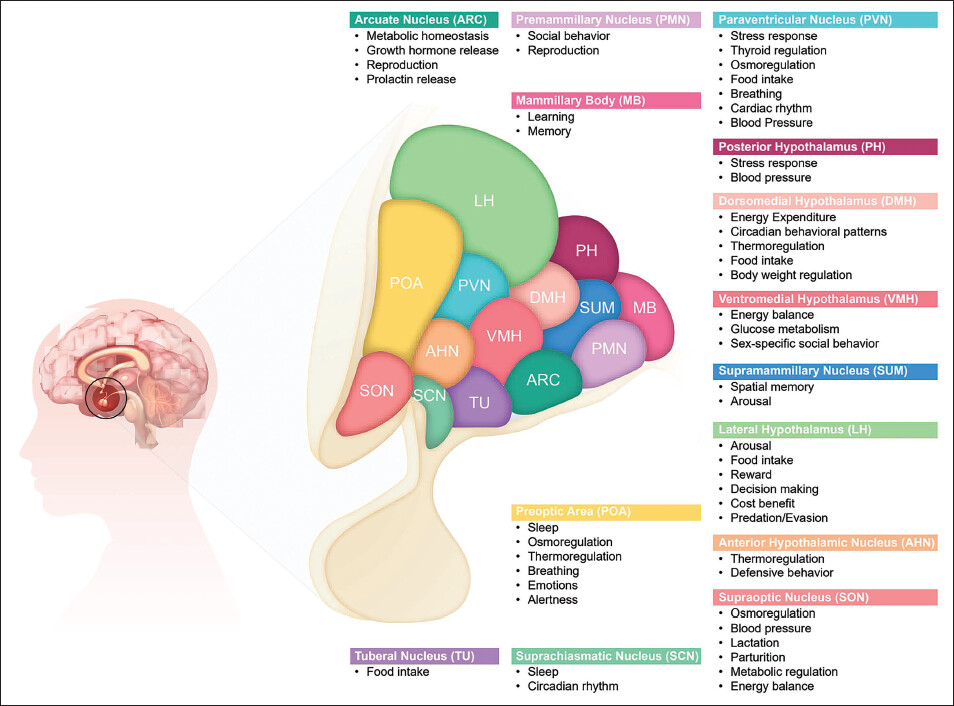
Take a look and see…
| Hypothalamus function | Why you should care (click the link to read more) |
| Body balance | Keeps internal conditions stable |
| Temperature | Prevents overheating or overcooling through thyroid function |
| Hunger & fullness | Influences appetite and weight through pituitary and pancreas |
| Metabolism | Affects energy use and blood sugar through pancreas and thyroid |
| Sleep & circadian rhythm | Controls the body clock by the SCN Suprachiasmatic Nucleus |
| Stress response | Regulates cortisol and adaptation by the adrenal glands |
| Hormones at all life stages | Coordinates the pituitary gland for appropriate hormonal responses |
| Hydration | Controls thirst and water balance by the pituitary and kidneys |
| Emotions & motivation | Links body signals with behavior and feelings of safety or danger |
| Breathing & heart rate | Helps the body adapt to stress and activity level through stress hormones. |
Closing Thought
The hypothalamus may be small, but it acts as the body’s most important command center. It helps regulate just about any internal process you can think of. In many ways, it is the brain’s master coordinator for keeping the body in balance.
The encouraging takeaway for you is that your simple daily habits may help optimize all the systems the hypothalamus helps regulate… and that translates to a healthier you!