


By Claire Bacon, ACN, CNC
Hormone discussion is all the rage right now, and Estrogen is happy to be at the center of attention. If we could put a little personality to these hormones, Estrogen is the entertainer, aka the drama queen. Progesterone is the quiet, calm little sister of estrogen. She is the beautiful but shy lil sis with her nose in a book, who rarely gets attention. Her power comes from a quiet intelligence that knows when to step in and take control. She balances out her boisterous big sis who sometimes doesn’t know when to shut up. Progesterone is the rock who keeps estrogen grounded and sane.
Progesterone in our Cycling Years
Progesterone is essential for pregnancy, but it is not “just” a pregnancy hormone. Yes, it is required to maintain gestation and for ensuring success of the initial blastocyst implantation. But also, Progesterone calms the nervous system, lifts mood, and deepens sleep. It builds bone. It steadies the immune system and cools inflammation. The monthly rise is a dose of resilience, given to you by your own body.
The estrogen that peaks around Day 14 to trigger ovulation has its own benefits. It protects the heart and the blood vessels, slows bone loss, and keeps the brain sharp. These two hormones – estrogen and progesterone – work as a pair, and ovulation is the functional hinge between them.
This is why women need not just a few years, but 35 to 40 years of ovulatory cycles. Not just for producing babies, but to guard against osteoporosis, strokes, dementia, heart disease, and breast cancer. This is why the menstrual cycle can be viewed as a vital sign, alongside your heart rate and blood pressure. A regular, ovulatory cycle is one of the clearest signs of balanced hormones.
But what happens when you’re not ovulating regularly, such as, within perimenopause?
Without ovulation, your body won’t produce nearly as much progesterone, and that’s where trouble can arise – at any age. Aside from being a well-known risk factor for miscarriage, other symptoms of systemically low progesterone include:
- Difficulty concentrating and forgetfulness
- Foggy thinking
- Poor sleep
- Mood swings and depression
- Being on the verge of tears
- Anxiety
- Fluid Retention
- Puffiness and bloating
- Irregular periods
- Severely painful cramps
- Heavy cycles
- Uterine fibroids and endometriosis
- Tender breasts (also could be excess prolactin)
- Fibrocystic breasts (also could be lack of iodine)
- Men – decreased urine but increased urge
- Men – prostate issues
Note that you quite possibly could have these symptoms starting in your thirties. Low progesterone is not just a perimenopause or menopause thing. It can be due to many factors, including weak signaling from the pituitary gland, excess exposure to obesogen chemicals, and/or poor detoxification. In addition to that, your gut bacteria (if imbalanced) could be recycling much of your estrogen back into circulation, causing another level of estrogen dominance.
So many things to consider!
Let’s take a look at some more detail about progesterone…
Progesterone Production and Benefits in the Body
Progesterone is produced primarily in the gonads (ovarian follicles/corpus luteum or testes), and by the placenta after 10 weeks of pregnancy. It is produced to a much lesser extent in the adrenal cortex. Progesterone receptors are present all over the body, for both men and women:
- Six places in the brain (amygdala, hippocampus, prefrontal cortex, hypothalamus, striatum, and sensorimotor cortex)
- Within the coronary artery
- In the gut lining,
- In the lining of the lungs, and
- Throughout the nervous system.
Progesterone has so many uses and protective actions all over our bodies. Most importantly, progesterone signals to our calming nervous system, the parasympathetic nervous system.
Progesterone may demonstrate neuroprotective factors in both the central and peripheral nervous systems, affecting myelination processes (think MS) and regulation of astroglial plasticity (brain function). Likewise, progesterone aids neuron survival in neurodegenerative diseases, such as Amyotrophic Lateral Sclerosis (ALS). These effects are due to the expression of progesterone receptors located throughout the nervous system.
In women, we need progesterone to protect not just the lining of the uterus, but also to protect our ovaries. It has also been studied regarding its protective effect on osteoporosis. In the musculoskeletal system, progesterone interacts with estrogen to form an equilibrium for peak bone mineral density.
In men, progesterone functions to facilitate spermiogenesis and androgen synthesis, giving benefits for fertility. And it has been studied for its beneficial effects on benign prostate hyperplasia (BPH).

Even more benefits…
Progesterone increases flow through small blood vessels in a similar way as estrogen. It decreases blood pressure. It increases the rate of breathing and therefore is helpful for some lung diseases. It also causes us to burn about 300 more calories a day because it increases our basal body temperature. And it blocks the production of dihydrotestosterone (DHT), the androgen hormone that causes acne and unwanted facial hair growth.
Many Endocrine Disrupting Chemicals (EDCs) are obesogens, also called xenoestrogens or anti-progestins. We need progesterone to counteract the estrogenic effects of chemicals in our environment and food. Yet at the same time, progesterone is becoming harder and harder to produce.
BHRT Testing
When looking at progesterone levels through blood testing, you want approximately 4 to 15 ng/mL. However, most menopausal women who are not using hormone replacement often will test around 1 ng/mL or less. Woefully deficient, but rarely checked or prioritized!
The previous outdated guidance was that if a woman had had a hysterectomy, she did not need to add progesterone with her estrogen support. Now, we know this advice was misguided and wrong! Everyone needs a certain level of progesterone to achieve optimal health. Of course, you can accomplish that with either bioidentical hormone replacement therapy (BHRT) or herbal support. More on that later.
Our advice to you is to work on supporting adequate progesterone, with BHRT or herbs, even if you do not have a uterus anymore. If your doctor suggests you do not need progesterone, that’s a red flag that your doctor is not up-to-date on menopause care. Find another provider!

WHI Re-Review and Progesterone Research
According to a 2024 re-analysis of the Women’s Health Initiative (WHI), the women on estrogen-only hormone replacement therapy (Premarin) went on to have 2x the long-term risk of ovarian cancer and 2x the risk of death. The risk increases over time, with a 60% greater risk for women who used estrogen-only therapy compared to those who never used any HRT, without progesterone, that is.
But if you give progesterone along with estrogen, this scenario did NOT increase ovarian cancer risk. In fact, progesterone replacement significantly reduced the risk of ovarian cancer. That’s why we say, Progesterone is a cancer protector. This research from Dr. Cheblowski, MD, PhD shows progesterone therapy is needed even if you do NOT have a uterus. In this case, progesterone is being found to be “ovarian protective”. His research was presented at the annual meeting of the American Society of Clinical Oncology in Chicago.
The results of the Million Women Study, published in 2003, revealed similarly concerning findings associating progestin-containing HRT with an increased incidence and mortality from breast cancer.
However, it’s not always that simple.
It depends on what form of estrogen and what delivery method is being used, and what form of progesterone (bioidentical or synthetic progestin) and how it is delivered, too (oral, vaginal, rectal, injectable). The WHI used oral Premarin and medroxyprogesterone acetate – neither of which are in common use today. When reading HRT research, there is so much nuance, it can make your head spin!
Clinical Nuance with Progesterone Use
Here is a study from 2023 that describes in deep detail how complex the signaling between progesterone and different types of tissue receptors can be.
Breast Cancer Incidence: In the WHI trial, combining oral estrogen with a synthetic progestin (E+P) increased breast cancer incidence by up to 29%. Conversely, estrogen-alone therapy in women with a hysterectomy was found to reduce breast cancer risk. [1, 2, 3, 4] So, the risky part was pointed to the synthetic progestin use.
Tumor Growth and Diagnosis: Tumors that developed during the oral E+ synthetic P therapy were more frequently node-positive, were diagnosed at more advanced stages, and resulted in greater mortality. The hormones also increased breast density, which can be an obstacle in delaying cancer detection on mammograms. [5,6, 7]
Lung Cancer: Dr. Chlebowski’s WHI subset research highlighted that combined oral estrogen plus synthetic progestin therapy is linked to an elevated risk of death from non-small cell lung cancer (NSCLC).
Covid: However, a 2021 study of 42 men with Covid determined that the addition of injected progesterone was beneficial for the men’s recovery. Personally, I don’t know anyone using progesterone injections. I don’t know how well this data could be applied to making broad assumptions across larger cohorts of people.
Some reassuring data on bioidentical oral micronized progesterone…
The strongest evidence that progesterone does not cause harm comes from the very high levels of progesterone during pregnancy. You just don’t see pregnant ladies developing cancer on a regular basis.
This study on the therapeutic use of OMP states that it can be used successfully with PMS, amenorrhea, to prevent endometrial hyperplasia, for high-risk patients with Turner Syndrome, and luteal phase insufficiency. OMP has a neutral or positive impact on cardiovascular and metabolic health, and does not increase the risk of blood clots.
The results of this study showed (1) oral MP provides endometrial protection if applied for 12-14 days/month at 200 mg/day for up to 5 years; (2) vaginal MP may provide endometrial protection if applied for at least 10 days/month at 4% (45 mg/day) or every other day at 100 mg/day for up to 3-5 years; and (3) transdermal micronized progesterone DOES NOT provide endometrial protection. Good to know!
Twelve weeks of oral micronized progesterone treatment has a largely neutral effect on cardiovascular markers, metabolic, inflammatory and coagulation markers in healthy postmenopausal women. Endothelial function is not compromised, and possibly slightly improved by progesterone.
Confusing Results on Progesterone
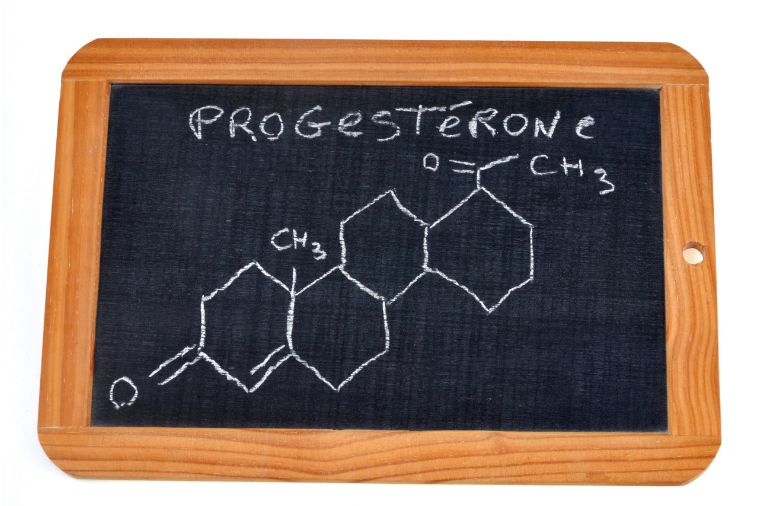
The most important point I want to make is to pay attention when the study you’re reading distinguishes between synthetic progestins (like medroxyprogesterone acetate, as used in the WHI) versus bioidentical oral micronized progesterone (more commonly used today). Many times the researchers don’t explicitly state what form of progesterone they were using. The terms “progesterone, progestogens and progestins” are often used interchangeably, even though they are very different molecules.
This is why the role of progesterone in cancer research remains controversial. Sometimes it’s protective, sometimes it’s proliferative, and the details you need for decision-making are hard to find. And very large randomized controlled trials (RCTs) comparing oral micronized progesterone (OMP) and placebo have not yet been performed.
Maybe one day, soon!
Of course, every research study will state in its conclusions that “more research is necessary”. The more information we find out, the more we are left with questions. So we need more research… it’s job security for the researchers who never actually make a definitive position!
That can make drawing conclusions about hormone risks and benefits extremely confusing. As with anything, you can find studies to support both sides – whether something is helpful or harmful. That goes for vitamin D supplementation, fish oil use, and antioxidant support, too. This fact likely depends on what organization is funding the study, and what quality of product was being used. So take everything you find online with a grain of salt, and a magnifying glass, too!
Who Shouldn’t Use OMP?
After all of that discussion above, who really shouldn’t use oral micronized progesterone?
- Women with progesterone hormone-sensitive cancers need alternatives.
- Women with peanut allergies can request a peanut-free compounded version.

Herbal Support for Optimizing Progesterone
We know that Nature gives us everything we need to be truly healthy. So, let’s take a deeper look at some of the beautiful herbs we offer in the office:
Mediherb Chaste Tree (Vitex agnus-castus) can help manage PMS, infertility, breast tenderness, improved lactation, and menopause. And it can provide relief for common symptoms like hot flashes, mood swings, breast tenderness, urinary incontinence, heart racing, and low libido. How? Chaste Tree helps strengthen the pituitary gland with normal timing and output to naturally rebalance hormones.
Mediherb Wild Yam Complex contains Wild Yam, Black Cohosh, St. John’s Wort, Sage, Korean Ginseng, and Shatavari root, which form a synergy to alleviate menopausal hot flashes, night sweats, and even joint pain. The natural compounds in this formula don’t actually make your progesterone level rise. Instead, they work through a combination of neuro-endocrine, estrogen receptor, hypothalamic, serotonergic, GABAergic, and adaptogenic mechanisms.
Ashwagandha Complex provides adaptogens that help balance the body’s stress response, including Ashwagandha, Licorice, Skullcap and Korean Ginseng. By lowering elevated cortisol (a key stress hormone), it prevents the body from “stealing” the building blocks of progesterone to respond to stress.
Herbal remedies for hormone balance are most effective when used as part of a holistic, personalized plan that includes:
- A nutrient-dense, anti-inflammatory diet
- Blood sugar and stress regulation
- Movement and rest
- Regular check-ins with your favorite Chiropractor and Nutritionist. That’s us!!

In Closing
Today’s blog was A LOT! I know. Even if the science was a lot to handle, just know that deciding on progesterone and BHRT in general is a big decision. It is YOUR decision to make. We are here to provide you as much information you need to make the best decision for you.
Remember, listening to your body and making gradual adjustments is the key to lasting change.
Please contact us and request a Nutrition appointment to discuss what’s best in your unique case!