


By Claire Bacon, ACN, CNC
Your gut does a lot more than digest your food. Your gastrointestinal tract is involved in nutrient absorption, immune function, gut-barrier integrity, neurotransmitter production, and even your ability to perform and recover from exercise. So, how do you know if you have an unhealthy gut?
Your body will let you know. You just have to listen.
First, the Physiology of Stress Hormones
Cortisol
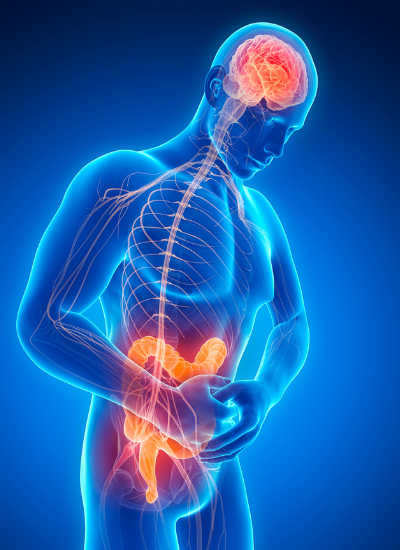
Cortisol is a stress hormone that comes from the endocrine system. When the brain perceives a stressor, the hypothalamic-pituitary-adrenal (HPA) axis is activated:
Hypothalamus senses the event → secretes CRH → activates Pituitary → secretes ACTH → signals to Adrenal cortex (outer part) → secretes Cortisol.
Cortisol is essential. You need it to regulate glucose and blood pressure, control inflammation, and provide energy.
Cortisol can influence the GI tract in several ways:
- Motility: Acute stress can speed intestinal transit in some people and slow it in others.
- Intestinal barrier: Chronic stress can affect tight-junction regulation and lead to leaky gut.
- Immune function: Cortisol modifies mucosal immune activity and inflammatory signaling.
- Microbiome: Chronic psychological and physical stress can alter the composition and metabolic activity of the gut microbiome. This can have a direct effect on weight and bloating.
- Digestive function: Stress can affect gastric emptying, secretion, and visceral sensitivity in negative ways.

Adrenaline and Noradrenaline
The other major component comes from the sympathetic nervous system. During stress or intense exercise, the Adrenal medulla (inner part) and the sympathetic nerves (all over the body) release Epinephrine (Adrenaline) and Norepinephrine (Noradrenaline).
These are extremely important during exercise because they help direct resources toward the tissues that need them immediately. These include the heart, lungs, and skeletal muscles. That comes at a cost to the GI tract.
Sympathetic activation can reduce GI blood flow and digestive activity, and alter intestinal motility (faster or slower). This is where explosive diarrhea comes from, which resolves on its own, and no, you don’t necessarily have a “stomach bug”.
These are the mechanisms by which someone can eat a “healthy” diet, yet still develop significant digestive symptoms when they’re under emotional or physical pressure.

Four Signs of an Unhealthy Gut
1. Feeling Bloated and Gassy
When you eat, your body naturally produces a small amount of gas as part of the digestive process. Certain types of gut bacteria produce more gas than others.
So, if your gut health is out of balance, you may have too many of these gas-producing bacteria. This can cause distention and discomfort in your belly, leaving you feeling bloated. When you’re feeling gassy and need to cut down on some unwanted gut bacteria, start with Saccharomyces boulardii or Lactic Acid Yeast. It’s a beneficial yeast that scavenges Candida and cuts down on other harmful species.
2. Irregular Bathroom Trips
Your gut plays a crucial role in keeping you regular. When your digestion and gut health are unbalanced, your body has a more difficult time breaking down your food and eliminating waste. When this happens, you might experience symptoms like constipation or diarrhea.
If constipated, you’ll want to get the bile flowing better with Beta-TCP, a rich source of beets. And if loose stools are more the issue, get fixed up by adding in Hydro-Zyme, Zypan, or Diaplex (with hydrochloric acid) for upper digestive support. These products help to overcome the shutdown of stomach acid that occurs with chronic stress.

3. You’re Constantly Tired
To help you sleep, your body produces a neurotransmitter called serotonin to keep you calm and content. The vast majority of this important brain chemical is produced in your gut!
When you have an unhealthy gut, it can interfere with your ability to get a good night’s sleep. This means you’re getting either interrupted sleep or you’re not sleeping at all. So, you wake up feeling exhausted. The less rested you are, the more tired you feel during the day.
One of our favorites for sleep is Alpha Theta PM. This product gets its relaxing benefits from L-Theanine, Skullcap, Lemon balm, 5-HTP, and Passionflower. It’s Melatonin-free, but can’t be used for those on a SSRI antidepressant.
For more specific support, Zenbiome Cope and Zenbiome Sleep contain two targeted spore-based probiotic strains that replenish your natural ability to produce calming neurotransmitters. Also from Microbiome Labs, Gut-Brain Reset is a combination of these two individual strains. Available in office.
4. Race Day Wrecks Your Gut
The recent HYROX Beijing event on 9-12-26 brought this issue into the global spotlight when Australian athlete Joanna Wietrzyk experienced diarrhea and loss of bowel control, yet continued competing and finished the race. The incident generated a social media storm about athlete safety and hygiene because 1) it was a horrifying spectacle, and 2) HYROX competitors share the course and equipment.
Umm… I am currently training for my first Hyrox. This is not what I signed up for!
Let’s be honest: that display was not normal GI function during exercise. It’s also not a display of common sense, decency, or sportsmanship. It was quite categorically a shocking embarrassment for the athlete, as well as the event organizers.
Personally, I’ve been doing 5 or 6 triathlons a year for 26 years. I’ve done the NY Marathon, and 11 Half-distance Ironmen (70.3s). I’ve never witnessed a GI accident on the scale of this one. Not from any competitor, at any distance. Even so, I know it is quite common to have a little stomach upset, pre-, during, or post-race. The proper thing to do is exit the course and find a porta-potty. Sometimes, it’s just not your day. There will be another race to win another day.
Yes, intense exercise can temporarily reduce blood flow to the digestive tract and increase gastrointestinal stress. Yes, high stress hormones, certain movement patterns, heat/hydration, and pre-race fueling can all influence bowel function. But a resilient GI system should be capable of handling this kind of added stress.
A healthy gut should maintain function even when your body is challenged.

Three Easy Ways to Fix An Unhealthy Gut
It might seem like no matter what you do, your gut and digestion can turn on you. Everything might be working fine for a few days and then WHAM – you’re back to feeling miserable again. Fortunately, it is possible to reverse the signs of an unhealthy gut.
1. Clean Up What You Eat
To keep your gut in shape, let’s first look at what’s on your plate. The best way to fix an unhealthy gut is to avoid sugary or processed foods. Instead, we want to include plenty of:
- High-fiber vegetables, like chickpeas, beets, lentils and beans
- Quality proteins, like wild-caught salmon, pastured chicken, and grass-fed beef
- Healthy fats, like avocado and coconut oil
- Prebiotic foods, such as artichokes and asparagus.
- Probiotic foods, including Kombucha tea, coconut kefir, Bubbies fermented pickles, Kim Chi, and raw sauerkraut.
The goal is a diverse microbiome – more diverse than what comes in a probiotic capsule!
And, of course, eliminate any suspected food sensitivities from your diet as soon as possible. If you’ve never eliminated gluten, dairy, corn, soy, or sugar, now is the time to start!

2. Gentle Exercise for Stress Management
Another important consideration to keep your gut working well is your level of physical fitness. Studies show the more consistently you move, the more diverse your gut microbiome will be. If you can keep your exercise intensity under control, your nervous system will have better regulation, as well.
That may include some exposure by swimming in a lake (although potentially risky). Also, just walking or jogging out in nature will help you pick up some good organisms for your gut health.
If exercise hasn’t been your thing, start small. Choose something you enjoy and exercise a couple of days a week and slowly work your way up. Or begin by walking a mile a day. Slow and steady is better than never.
Exercise is a powerful way to help reduce stress, especially out in the sunshine. Best gentle activities are:
- Yoga
- Tai Chi
- Cycling
- Swimming
- Brisk walking
Try one of these to get you moving and help bring your stress levels down.

3. Do a Gut Microbiome Test
If you feel you’re doing ALL THE THINGS, yet still having trouble with your unhealthy gut, maybe it’s time to get more objective.
In our office, we run the GI-Map and the Biome FX stool analysis tests. Both tests check for a wide variety of microorganisms – both beneficial and pathogenic (including parasites). They also check for basic GI markers of good digestion.
Having this data on board can be a great way to gain insight about your gut diversity and what therapeutic steps to do next!
Reverse Your Unhealthy Gut Today!
When your gut health is off, it doesn’t take long before your body starts giving you clues. We can give you some new tools for your toolkit for rebalancing your gut health.
Try one of the above tips to support your body, get your gut health back in balance, and reduce your stress along the way!
Remember to reach out to us for a Nutrition appointment if you’re ready for support and guidance!